Utility Marking Experts
What Is Utility Marking?
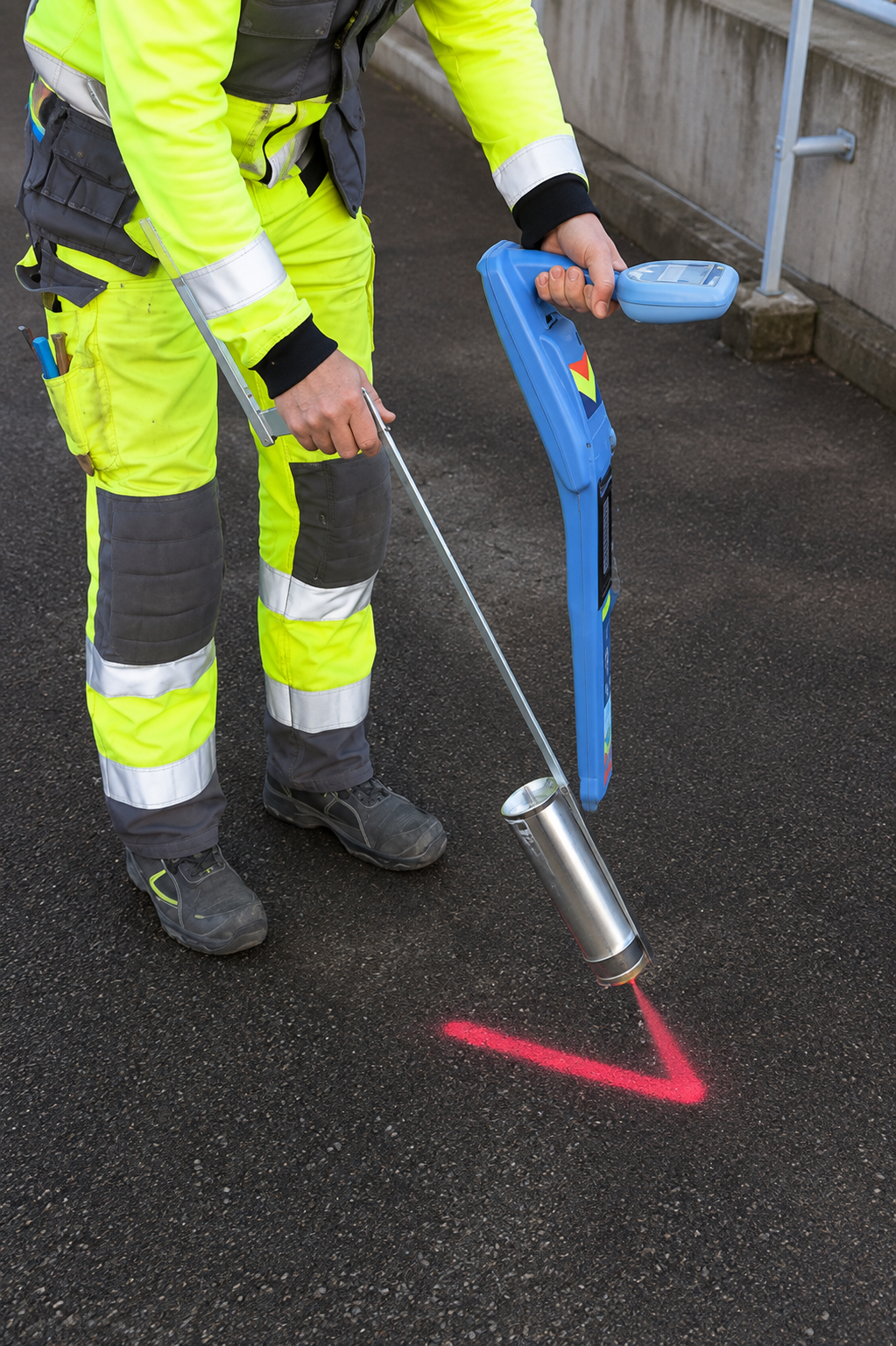
Utility marking is the process of identifying and visibly marking the location of underground utility lines on the ground surface before excavation, drilling, trenching, or construction begins. Markings can identify utilities such as electric, gas, water, sewer, telecommunications, and other buried infrastructure, giving contractors and property owners a clear visual indication of where underground lines are located.
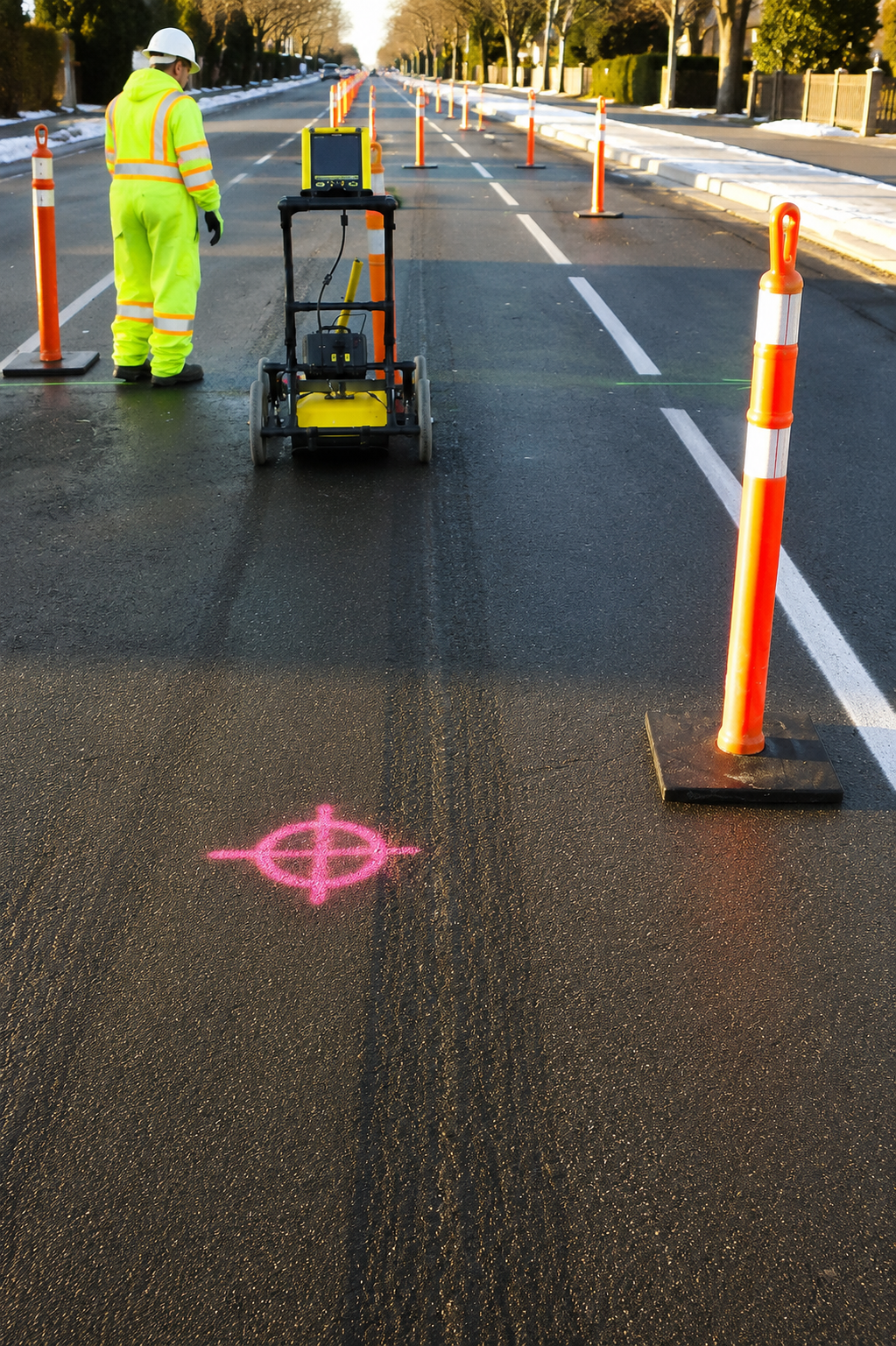
Professional utility marking typically involves using specialized locating equipment and detection methods to trace underground utility routes and then marking the identified locations on the surface. Depending on the project, technicians may use electromagnetic locating equipment, Ground Penetrating Radar (GPR), and other technologies to improve detection. Markings may be placed along utility routes or around specific points so excavation crews can recognize potential utility conflicts before starting work.
Accurate utility marking helps project teams plan excavation and construction activities more effectively while reducing the risk of utility strikes, service interruptions, property damage, project delays, and costly repairs. It is especially useful for construction, landscaping, roadwork, trenching, drilling, and other ground-disturbing projects where knowing the location of underground infrastructure is essential for safer and more controlled work.
When Is Utility Marking Necessary?
Utility marking is necessary before any project that involves digging, excavation, trenching, drilling, grading, landscaping, or other ground-disturbing activities. Clearly marking the locations of electric, gas, water, sewer, telecommunications, and other underground utilities helps workers understand where buried infrastructure may be present before equipment enters the ground. This is particularly important when utility records are incomplete, outdated, or when private utilities may not be shown on standard public utility information.
Utility marking is commonly used for residential construction, commercial development, roadwork, utility installation, irrigation projects, landscaping, fencing, foundations, and infrastructure improvements. Contractors, excavators, engineers, and property owners can use visible markings to plan work areas and identify potential conflicts between proposed excavation and existing utilities. For more complex sites, utility marking may be supported by electromagnetic locating, GPR scanning, GPS/GIS mapping, or other detection methods.
Having utilities properly marked before work begins can help reduce the risk of accidental utility strikes, service interruptions, equipment damage, project delays, and costly repairs. It also provides excavation crews with a practical visual reference while working on the site. When underground infrastructure could interfere with planned construction or excavation, professional utility marking can help crews work more safely and with greater awareness of existing subsurface utilities.
What Is Required For Utility Marking?
For utility marking, technicians need access to the work area and clear information about the project, including the proposed excavation, drilling, trenching, or construction locations. Helpful information may include site plans, utility records, previous surveys, property boundaries, and details about known public or private utilities. Clearly identifying the areas where ground disturbance is planned helps technicians focus the locating and marking process on the most relevant portions of the site.
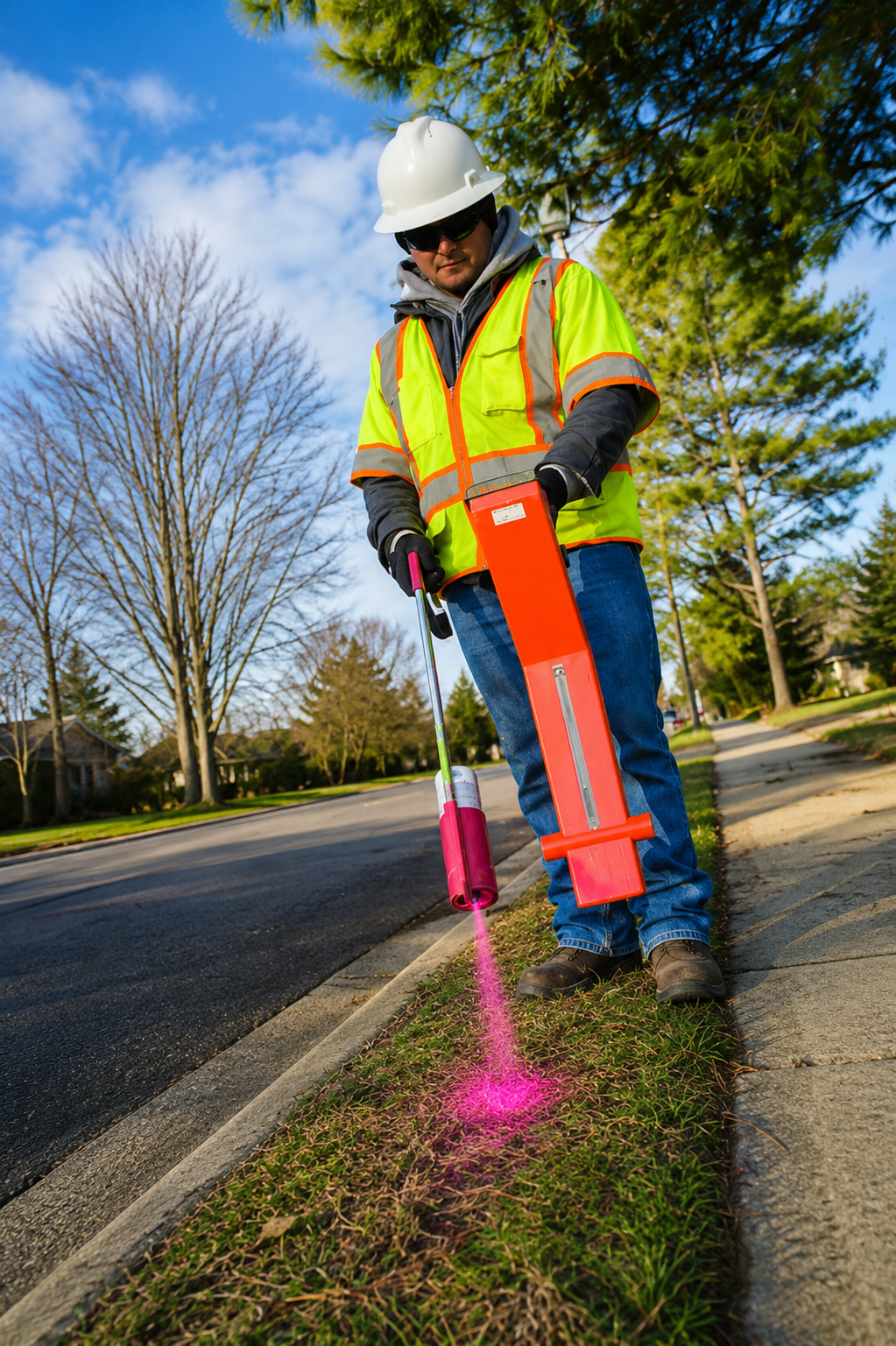
The process requires appropriate utility locating and detection equipment, operated by trained technicians. Depending on the type of utility and site conditions, technicians may use electromagnetic locating equipment, Ground Penetrating Radar (GPR), signal tracing equipment, GPS, and other specialized technologies. Once underground utilities are identified, their routes and relevant points can be marked on the surface using appropriate paint, flags, stakes, or other visible indicators so excavation crews can recognize potential utility locations.
Good site access and accurate project information can help make utility marking more efficient and reliable. The markings should be clear enough for contractors and excavation crews to understand the identified utility routes before work begins. Professional utility marking helps provide better awareness of underground infrastructure and can reduce the risk of utility strikes, service interruptions, property damage, project delays, and costly repairs during excavation and construction.
Our Reviews
What Our Customers Have to Say About Us!
Excellent utility locating service. The team was professional, responsive, and very accurate. They clearly marked the underground utilities before our project started, which helped us avoid costly delays and potential damage.

We had a great experience with Utility Locating & Mapping New Mexico. The technicians arrived on time, explained the process clearly, and provided accurate utility mapping. Highly recommended for contractors and property owners.
Very reliable and professional service. They located the underground lines quickly and provided detailed information that made our excavation project much safer. Great communication from start to finish.
The Process
3 Step Process For Your Utility Marking Needs

Contact Us
Start by completing the 'Get a Free Quote' form on our website to share your Utility Marking needs with us.

Schedule Your Estimate
Next, we'll arrange a property visit at a time that works for you to provide an in-person estimate for your Utility Marking needs.

Get The Job Done
After you approve our estimate, we'll schedule a date to complete the job. Our team will work hard to exceed your expectations!
Request A Free Utility Marking Quote
BUSINESS
SERVICES
SERVICE AREAS
OPERATING HOURS
Sun: Closed
Mon: 7:00am - 7:00pm
Tue: 7:00am - 7:00pm
Wed: 7:00am - 7:00pm
Thu: 7:00am - 7:00pm
Fri: 7:00am - 7:00pm
Sat: 7:00am - 7:00pm